Live Zero in Instrumentation: Why 4-20mA Starts at 4mA
Live zero means the lowest valid value of a 4-20 mA signal is 4 mA, not 0 mA. A working loop never drops below 4 mA, so a reading under 4 mA tells your PLC or recorder something is wrong – a broken wire, blown fuse or dead supply – instead of looking like a real zero reading.
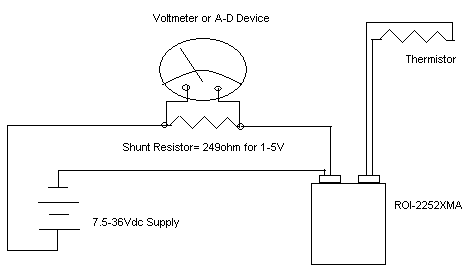
What is live zero?
Live zero is a key advantage of 4-20 mA instrumentation signals. The bottom of the measurement span – the “span zero” – is 4 mA, not 0 mA. Zero on the sensor’s scale still produces a current you can measure, so the loop is “alive” even at the bottom of the range.
That gives two benefits:
- Fault detection: any reading below 4 mA means an electrical problem, not a low measurement.
- Loop power: the 4 mA minimum is enough to run a 2-wire, loop-powered transmitter, so the signal wires also power the device – no separate power cable.
Live zero vs. a 0 V or 0 mA zero
Other signal conditioning methods use 0 V (or 0 mA) as the minimum. Then a good signal at the bottom of the range and a failed circuit look the same – and a fault you discover late can let a bigger problem develop.
| Signal | Lowest valid reading | Broken wire or dead supply reads | Fault visible? |
|---|---|---|---|
| 4-20 mA (live zero) | 4 mA | 0 mA | Yes |
| 1-5 V (4-20 mA across 250 Ω) | 1 V | 0 V | Yes |
| 0-20 mA | 0 mA | 0 mA | No – looks like a real zero |
| 0-5 V / 0-10 V | 0 V | 0 V | No – looks like a real zero |
What a reading below 4 mA tells you
With a live-zero transmitter, any reading under 4 mA means something is wrong in the loop:
- A supply fuse has failed or a breaker has tripped – reported immediately, not at the next inspection.
- A signal wire is broken, loose or disconnected.
- The transmitter or its sensor has failed.
Depending on your PLC or software, a reading below 4 mA can trigger an alarm straight away, or be logged so the event can be analysed later.
Does live zero work with a shunt resistor and a voltage recorder?
Yes. Put a resistor across the input and the current becomes a voltage (Ohm’s law, V = I × R) – and the live zero comes with it:
- 250 Ω shunt: 4 mA × 250 Ω = 1 V and 20 mA × 250 Ω = 5 V, so the signal reads 1-5 V.
- On a 0-5 V trend recorder: any value below 1 V indicates an electrical problem.
- For a 0-10 V input: a 500 Ω shunt gives 2-10 V, with 2 V as the live zero.
To convert the signal to engineering units, see the scaling formula in how to connect a thermistor to a PLC.
The ROI-XMA: 4-20 mA transmitters with a true live zero
The ROI-XMA is a loop-powered 4-20 mA transmitter with a 4 mA live-zero minimum – an improved way to read sensors on a PLC or recorder.
- Multiple sensor types and multiple signal ranges
- High linearity and high precision
- Fast response and long transmission distances
- True analog signal conditioning – not microprocessor-based A-D conversion
- Loop powered, 2-wire: the signal wires carry the power

10K NTC thermistor temperature transmitter (ROI-XMA).
Thermistor to 4-20 mA
10K NTC transmitters in four standard ranges. Other thermistors to order.
Thermistor transmitters →Potentiometer to 4-20 mA
Position feedback from 1K, 2K, 5K and 10K potentiometers.
Potentiometer transmitters →Live zero – common questions
What does live zero mean?
The lowest valid value of the signal is above zero – 4 mA on a 4-20 mA loop. Zero on the measurement scale still produces a measurable current.
What does a 4-20 mA reading below 4 mA mean?
An electrical problem: a broken or loose wire, a blown fuse or tripped breaker on the supply, or a failed transmitter or sensor.
Why does 4-20 mA start at 4 mA instead of 0 mA?
So a fault can’t be mistaken for a real zero reading, and so a 2-wire loop-powered transmitter always has enough current to run.
What are the NAMUR NE 43 limits?
NAMUR NE 43 is a common convention for 4-20 mA fault signalling: 3.8–20.5 mA is the measurement range, and a reading of 3.6 mA or less, or 21 mA or more, signals a failure. Check whether your transmitter and PLC follow it.
Does live zero work on a voltage input?
Yes. A 250 Ω shunt turns 4-20 mA into 1-5 V, so 1 V is the live zero and anything below it is a fault.
Related guides
Thermistor wiring to a PLC
Wire a thermistor through a 4-20 mA transmitter into a PLC analog input.
Read the guide →Analog signal conditioner benefits
Why converting a sensor to a standard analog signal pays off.
Read more →Need a 4-20 mA transmitter with live zero?
From a single sensor to hundreds, we connect sensors and software – signal conditioning, signal processing and data acquisition, including custom software.
Questions? Contact us – we look forward to answering them.